
Our Marketing Team at PopaDex
Mastering Self Employed Retirement Planning

When you’re self-employed, effective self employed retirement planning means taking the reins of your financial future.When you’re self-employed, effective self employed retirement planning means taking the reins of your financial future. Without an employer-sponsored 401(k), the game is different. The core strategy is to pick a retirement account designed for people like us—think SEP IRAs or Solo 401(k)s—and then build a solid savings habit, even when income swings wildly.
Navigating Retirement Planning When You’re the Boss
Let’s be real for a second. When you’re running your own show, planning for retirement can feel like a whole other job you didn’t sign up for. There’s no HR department sending out friendly reminders, and no automatic 401(k) deduction quietly building wealth in the background. It’s all on you.
Every single contribution, every investment choice, lands squarely on your shoulders. While that freedom is a huge part of why we do what we do, it also comes with challenges that traditional employees just don’t have to think about.
The road to a secure retirement is just built differently for entrepreneurs. There’s no company match to supercharge your savings, and the feast-or-famine income cycle can make consistent saving feel like a pipe dream. It’s no wonder so many freelancers and small business owners feel like they’re playing catch-up.
This infographic captures that spirit of being your own boss and navigating the modern work landscape.
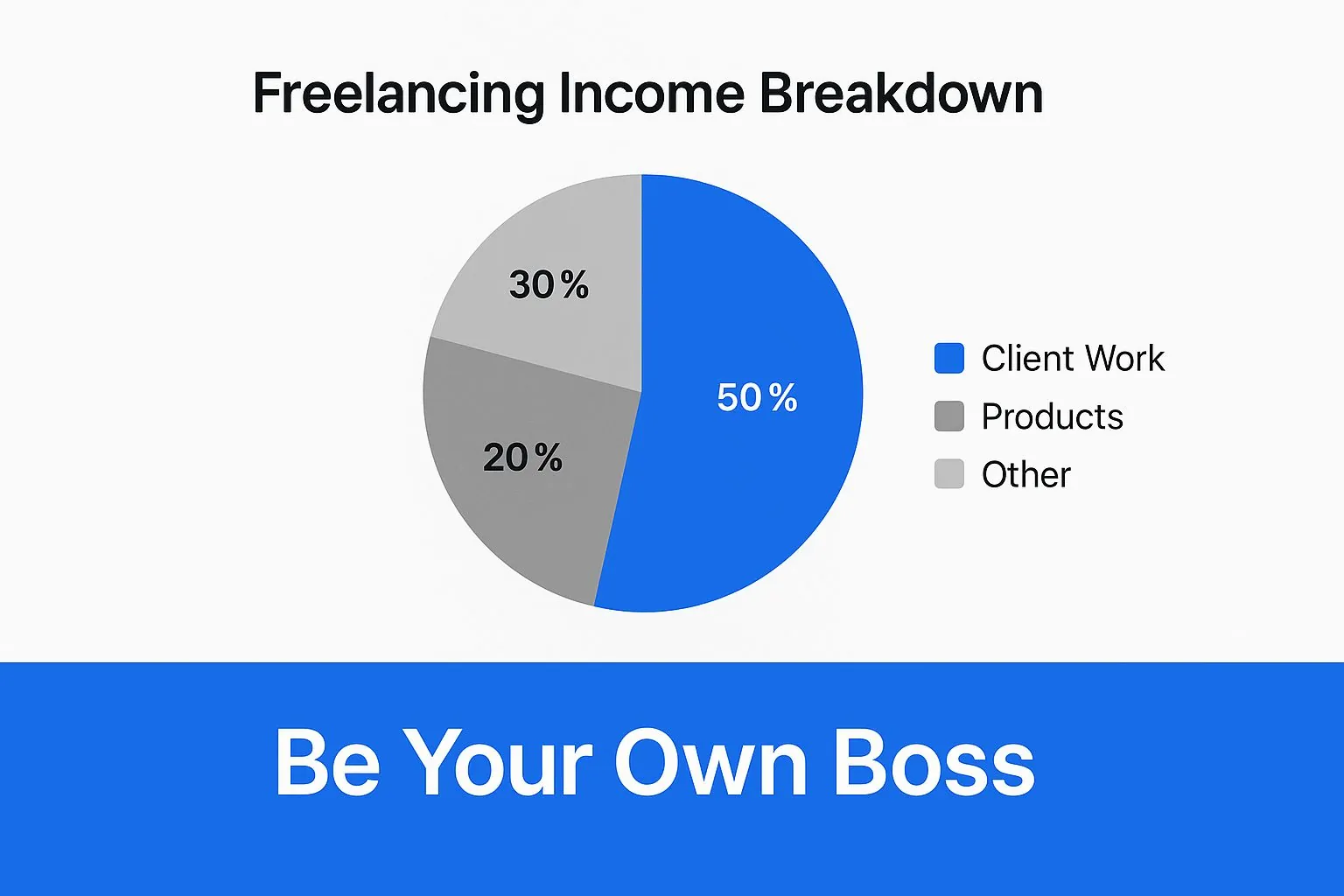
The image really drives home the autonomy that defines self-employment. That independence touches every part of your financial life, especially retirement.
The Freelancer’s Dilemma
I see this all the time. Take a freelance consultant I know, ten years into a great career. She has a strong client list and charges premium rates, but her retirement savings are almost nonexistent. Month after month, business costs and quarterly taxes eat up a huge chunk of her income. Whatever’s left covers personal bills, with a little tucked away as a cash buffer for the inevitable slow periods.
The idea of locking money away for retirement feels like a luxury she just can’t afford yet. Plus, all the jargon around different retirement accounts is completely overwhelming.
This isn’t a unique story; it’s the norm for so many. The very nature of being self-employed forces you to focus on the short-term: land the next client, manage cash flow, and keep the lights on. Retirement is a distant, fuzzy goal that always gets pushed down the to-do list.
The truth is, building a secure retirement on your own terms isn’t about just trying to save more. It’s about creating a system that actually works with your career, not against it. A system that accounts for volatile income and puts your progress on autopilot.
Understanding the Savings Gap
The numbers don’t lie—there’s a major disconnect between retirement dreams and reality for entrepreneurs. According to the 2025 Transamerica Institute Workforce Survey, self-employed workers in the U.S. have a median of just $87,000 socked away for retirement. While that’s a bit more than traditionally employed workers, it’s a world away from the $700,000 they estimate they’ll actually need. You can dig into the full workforce outlook right on the Transamerica Institute website.
That gap is a massive wake-up call. The solution goes beyond working harder; it’s about putting smart, automated strategies in place. Mastering the fundamentals is how you start closing that gap for good. For a solid primer, check out our guide on retirement planning basics. It walks you through the core principles you need to build a financial future you can count on, one where you can retire comfortably and on your own schedule.
Choosing the Right Retirement Account for Your Business
Picking the right retirement account is probably the single most important decision you’ll make in your self employed retirement planning. This goes beyond opening an account; it’s about choosing the engine that will drive your financial future for decades.
The options can feel a bit overwhelming at first, but for most freelancers and business owners, it really comes down to three main players: the SEP IRA, the Solo 401(k), and the SIMPLE IRA.
Each one has its own quirks and advantages, depending on how your business is set up, how much you earn, and what your long-term goals look like. Getting this right from the start saves a ton of administrative headaches and helps you sock away as much as possible down the road. Let’s get past the jargon and see how these actually work in the real world.
The Solo 401(k): For High-Earning Solopreneurs
Picture this: you’re a freelance software developer who consistently brings in a solid income and you don’t have any employees. For you, the Solo 401(k) is a powerhouse. Its killer feature is that it lets you contribute from two different angles—as the “employee” and as the “employer.”
This dual-contribution setup gives it a massive advantage over the other plans. While being self-employed has its challenges, it also unlocks some incredibly flexible and generous retirement plans. For instance, a Solo 401(k) lets you contribute as an employee (up to $23,500 in 2025) and as an employer, adding up to 25% of your compensation. The total is capped at $70,000 for 2025, not even counting catch-up contributions if you’re over 50.
Another huge plus for the Solo 401(k) is the option for a Roth contribution on the employee portion. That means tax-free growth and, more importantly, tax-free withdrawals when you retire. It also lets you take out a loan against your balance, which can be a lifesaver if you hit an unexpected cash crunch and need to access funds without getting slammed by taxes and penalties.
Key takeaway: The Solo 401(k) is hands-down the best choice for high-income self-employed people with no employees who want to max out their savings and have the flexibility of a loan option.
The SEP IRA: For Simplified, Flexible Savings
Now, let’s switch gears. Imagine you’re a graphic designer whose income is a bit of a roller coaster—some years are amazing, others are lean. You need a simple, low-maintenance plan that lets you contribute a lot when you can, but doesn’t force you to contribute when you can’t. This is exactly where the SEP IRA shines.
The beauty of the SEP IRA is its simplicity and flexibility. There are no annual filing requirements with the IRS (unless your account gets really big), and you get to decide how much—or how little—to put in each year. Contributions are made only by the employer (that’s you!) and are tax-deductible, which lowers your taxable income for the year. It’s a win-win.
The contribution limits are fantastic, too—you can put away up to 25% of your net adjusted self-employment income, with a maximum of $70,000 for 2025. This makes it perfect for stashing away a big chunk of cash during a banner year. The one catch? If you have employees, you have to contribute the same percentage of their salary as you do for yourself, which can get pricey fast.
The SIMPLE IRA: For Small Teams
Let’s look at one more scenario. You run a boutique marketing agency and have three part-time employees. You want to offer a retirement benefit to keep your team happy and attract good talent, but you need to keep costs and admin work to a minimum. For you, the SIMPLE IRA is the perfect fit.
The Savings Incentive Match Plan for Employees (SIMPLE) IRA is built for small businesses with up to 100 employees. It’s designed for both employees and the employer to chip in.
The IRS gives a pretty clear overview of the main plans available.
This image really highlights the core differences. The best choice often boils down to whether you have employees and how aggressively you want to save.
As the business owner, you’re generally required to make a contribution. You can either match what your employees contribute up to 3% of their pay, or you can make a flat 2% contribution for all eligible employees, even if they don’t contribute themselves. While the contribution limits are lower than the SEP IRA or Solo 401(k), it’s a great way to build a team-focused culture and offer a valuable benefit without breaking the bank.
Comparing Self Employed Retirement Plans
Choosing between these plans can feel complex, but breaking them down side-by-side makes the decision much clearer. This table compares the key features of the SEP IRA, Solo 401(k), and SIMPLE IRA to help you find the best fit for your business.
| Feature | SEP IRA | Solo 401(k) | SIMPLE IRA |
|---|---|---|---|
| Who Can Use It? | Self-employed individuals and small business owners with or without employees. | Self-employed individuals with no employees (spouse is okay). | Small businesses with up to 100 employees. |
| 2025 Contribution Limit | Up to 25% of compensation, max $70,000. | Up to $23,500 (employee) + 25% of comp (employer), max $70,000 total. | Employee: up to $16,500. Employer: match up to 3% or 2% non-elective. |
| Loan Option? | No | Yes | No |
| Roth Option? | No | Yes (for employee contributions) | Yes (for employee contributions) |
| Best For… | Business owners with fluctuating income or those with a few employees who want simplicity. | High-earning solopreneurs who want to maximize savings and have loan flexibility. | Small businesses wanting to offer an easy, low-cost retirement benefit to employees. |
Ultimately, the right plan aligns with your business structure, income level, and future goals.
Making the Final Call
So, how do you decide? It really boils down to answering a few key questions about where your business is today and where you see it going.
- Do you have employees (other than a spouse)? If the answer is yes, the Solo 401(k) is out. You’ll be looking at either the SEP IRA or the SIMPLE IRA.
- How much are you hoping to save each year? If you’re a high earner trying to sock away as much as possible, the Solo 401(k) and SEP IRA offer the highest limits by a long shot.
- Is having the ability to take a loan important? Only the Solo 401(k) comes with a loan provision. For some entrepreneurs, that flexibility is a deal-breaker.
- Do you want a Roth option for tax-free growth? Again, the Solo 401(k) is the clear winner here, offering a Roth component for your “employee” contributions.
For freelancers and consultants trying to sort through these options, getting the details right is critical for your long-term success. Our dedicated guide on retirement for independent contractors takes an even deeper dive into these strategies. At the end of the day, your choice should fuel your financial goals without adding a bunch of unnecessary complexity to your plate.
Building a Savings Habit with Unpredictable Income
Let’s be honest: one of the toughest parts of self employed retirement planning isn’t picking the right account—it’s actually putting money into it consistently. When your monthly income chart looks more like a Six Flags rollercoaster than a steady climb, the idea of a fixed contribution feels like a joke. How can you plan for the future when you’re not even sure what next month will bring?

The secret is to stop thinking like an employee. Forget about saving a set dollar amount. Instead, you need a dynamic system that moves with your cash flow, turning that unpredictability into an advantage. This means building a savings habit that’s tied to your earnings, not the calendar.
Adopt a “Pay Yourself First” Mentality
The single most effective strategy I’ve seen freelancers use is a twist on the “Profit First” model. The idea is simple but powerful: your retirement savings isn’t what’s left over after you pay your bills. It’s the very first “bill” you pay.
Every single time a client pays an invoice—it doesn’t matter if it’s for $500 or $5,000—you immediately shuttle a set percentage into your retirement account. You don’t wait until the end of the month. This is a non-negotiable action the second the money hits your business account.
For example, let’s say you commit to a 15% savings rate. A $2,000 invoice lands in your bank. Before you do anything else, $300 is transferred to your Solo 401(k) or SEP IRA. The remaining $1,700 is what you have to work with for taxes, business expenses, and your own paycheck. This simple move completely reframes saving as a core part of your business operations.
To lock this habit in, especially when income swings wildly, consider using a habit tracker. It creates a visual scorecard of your progress and reinforces the discipline of saving with every single payment you receive.
Implement a Tiered Contribution Strategy
A flat percentage is a great start, but a tiered strategy can really optimize your savings. This approach lets you save more aggressively during the feast months and pull back during the famine months—all without breaking the habit. You’re basically setting up automated rules based on your monthly revenue.
Think of it like a progressive tax system, but for your future self. Your contribution rate automatically adjusts to what your business can actually handle.
Here’s how a tiered system might look for a consultant:
- Tier 1 (Lean Month): Monthly revenue under $6,000 → Contribute 10%.
- Tier 2 (Average Month): Revenue between $6,000 and $10,000 → Contribute 15%.
- Tier 3 (Great Month): Revenue over $10,000 → Contribute 20%.
This system takes the emotion and guesswork out of the equation. At the end of the month, you just look at your top-line revenue and apply the right percentage. It guarantees you’re always saving something, but it also gives you permission to ease off the gas when cash flow is tight. Of course, a solid financial plan is the bedrock here; our guide on budgeting for self employed individuals can help you build that foundation.
A disciplined system is your best defense against erratic income. By automating your savings rules, you ensure that future-you gets paid consistently, even when your clients don’t.
Strategically Handle Financial Windfalls
Every freelancer daydreams about it: landing that one massive project that provides a huge cash injection. When that windfall finally arrives, the temptation is to splurge on a big business upgrade or a long-overdue vacation. The smarter play? Earmark a huge chunk for your retirement.
A large, unexpected payment is a golden opportunity to make a lump-sum contribution that can seriously supercharge your nest egg. Because you weren’t relying on this money for your normal budget, you can direct a much bigger percentage toward your retirement goals without disrupting your day-to-day operations.
Imagine a web designer lands a surprise $30,000 project. After immediately setting aside money for taxes (the critical first step!), they could decide to make a one-time $10,000 contribution to their SEP IRA. That’s a massive win.
When you get a big payment, follow these steps:
- Isolate the Funds: Don’t let it mingle. Move the entire payment into a separate savings account right away. This prevents it from getting accidentally absorbed into your regular spending.
- Calculate Taxes First: Figure out your tax liability on that income and set that specific amount aside. Never, ever invest money that belongs to the IRS.
- Define Your Goals: Decide what this money needs to do. Split it intentionally between retirement, boosting your business cash reserve, and a well-deserved personal reward.
Handling windfalls with intention is a hallmark of successful self employed retirement planning. It turns sporadic high-income events into powerful accelerators for your long-term financial security.
Calculating Your Personal retirement Number
Turning the vague dream of “retiring comfortably” into a real, tangible number is one of the most empowering things you can do for your self employed retirement planning. Without a clear target, saving can feel like you’re just throwing money into an account with no real purpose. Let’s stop guessing and start calculating, giving you a concrete goal to work towards.
The idea here is to figure out the size of the nest egg you’ll need to support the lifestyle you want once you hang it up. A fantastic starting point for this is a well-known guideline in finance called the “4% Rule.”
A Simple Benchmark: The 4% Rule
The 4% Rule is a refreshingly straightforward way to get a baseline estimate. At its core, it suggests you can safely withdraw 4% of your retirement savings in your first year of retirement. After that, you just adjust the amount for inflation each year, and you should be able to keep that up for about 30 years without the well running dry.
To use it, figure out your desired annual retirement income and multiply it by 25.
- Example: If you want to live on $80,000 a year in retirement, your target number is:
- $80,000 x 25 = $2,000,000
This $2 million figure is your first target. It’s a solid, if a bit simplistic, number to anchor your savings plan. But as a self-employed professional, you already know that simple rules often need a healthy dose of reality.
Adding Layers for a Realistic Picture
The 4% Rule is a great place to start, but it doesn’t cover some of the biggest financial curveballs life will throw at you. To nail down a more reliable retirement number, we need to layer in a few crucial factors.
- Inflation: This is the silent killer of purchasing power. What costs $100 today could easily cost $180 in 20 years, assuming a 3% average inflation rate. Your final number has to account for this.
- Healthcare Costs: This one is a monster, especially when you don’t have an employer-subsidized plan to fall back on. Fidelity estimates a 65-year-old couple retiring today might need around $315,000 (after-tax) just for healthcare expenses.
- Social Security: The good news is that by paying self-employment taxes, you’re contributing to Social Security. Your estimated future benefit can reduce the total amount you need to save yourself. You can get a personalized estimate straight from the Social Security Administration’s website.
A realistic retirement number is more than one figure; it’s a dynamic target that considers your unique life circumstances, from future medical needs to the taxes you’ll owe.
Putting It All Together: A Case Study
Let’s walk through a real-world example. Meet Sarah, a 45-year-old marketing consultant. She wants to retire at 67 with an annual income of $90,000 in today’s dollars.
- Calculate Future Income Needs: First, we adjust her $90,000 goal for inflation over the next 22 years. At a 3% annual inflation rate, she’ll actually need about $172,000 per year by the time she retires. Big difference, right?
- Estimate Total Nest Egg: Now, we use the 4% rule on her future income need: $172,000 x 25 = $4.3 million. This is her new, inflation-adjusted target.
- Factor in Social Security: Sarah checks her statement and expects to receive $30,000 per year from Social Security. This reduces her personal savings withdrawal need to $142,000 per year ($172,000 - $30,000).
- Recalculate the Final Number: Applying the 4% rule to this new figure gives us her final savings goal: $142,000 x 25 = $3.55 million.
This number is far more realistic than where we started. It’s also important to consider major potential costs, and when calculating your personal retirement number, it’s essential to factor in significant potential expenses like exploring the true cost of long-term care insurance.
Making Your Retirement Funds Work for You
Getting money into your retirement account is a huge win, but that’s just the starting line. Real wealth-building kicks off when you put that money to work. This is the big leap from simply saving money to investing it smartly—the engine that truly powers self employed retirement planning.

I’ve seen it countless times: entrepreneurs who are brilliant at making money but freeze up when it’s time to invest it. The world of stocks and bonds can feel like a foreign language, but the core ideas are much simpler than you might think. Let’s walk through how to get your retirement funds growing for the long haul.
Understanding Asset Allocation and Diversification
These two terms are the bedrock of solid investing. They sound complicated, but they’re really just about managing risk in a common-sense way.
Asset allocation is just deciding how you’ll split your money between different investment types, mostly stocks and bonds. Think of it like this: stocks are your high-growth, high-risk engine. They have the most potential to grow your money but also come with more bumps in the road. Bonds are your shock absorbers—more stable and less risky, but they won’t give you the same explosive growth.
Diversification is what you do inside those categories. Instead of betting all your money on one company’s stock, you spread it across hundreds or thousands of different companies, industries, and even countries. It’s the age-old advice: don’t put all your eggs in one basket. If one sector takes a nosedive, your whole portfolio doesn’t go down with it.
The goal isn’t to dodge risk entirely—that’s impossible. It’s to build a portfolio that can handle market storms and still capture growth over the decades you’ll be investing.
Keep It Simple with Low-Cost Investment Vehicles
You don’t need to be a Wall Street genius to build a strong retirement portfolio. In fact, some of the best tools are the simplest and cheapest. For most self-employed folks, two options are hard to beat.
-
Broad-Market Index ETFs: An Exchange-Traded Fund (ETF) is basically a basket holding pieces of hundreds or thousands of different stocks or bonds. A broad-market index ETF, like one that tracks the S&P 500, lets you own a tiny slice of the biggest companies in the U.S. all at once. You get instant diversification for an incredibly low fee.
-
Target-Date Funds: These are the ultimate “set it and forget it” solution. You pick a fund with a year close to when you want to retire (like a “2055 Fund”). The fund manager handles all the asset allocation for you, starting with a more aggressive mix of stocks when you’re young and automatically becoming more conservative as you get closer to retirement.
These options take the guesswork and constant tinkering out of the equation, freeing you up to focus on what you do best—running your business.
When to Consider Hiring a Financial Advisor
While DIY investing is easier than ever, there are definitely times when bringing in a pro is a smart move. A good financial advisor does more than just pick investments; they help you build a complete financial strategy that ties everything together.
Think about hiring an advisor if:
- Your finances are getting complex. Maybe you’re juggling a high income, significant business assets, or tricky tax situations.
- You’re just too busy or overwhelmed. If you don’t have the time or mental energy to manage your investments, outsourcing can bring huge peace of mind.
- You’re getting close to retirement. An advisor is invaluable for helping you shift from building wealth to creating a reliable income stream from your savings.
If you go this route, look for a fiduciary. This is a legal term meaning they are required to act in your best financial interest. Many specialize in working with business owners, so they get the unique challenges we face, like inconsistent income and maximizing contributions to plans like a Solo 401(k).
Your Top Self-Employed Retirement Questions, Answered
When you’re charting your own course with retirement, it’s natural for some tricky questions to pop up. Moving from theory to practice often reveals a few gray areas. Let’s tackle some of the most common hurdles that freelancers and entrepreneurs run into.
Getting clear, straightforward answers to these questions is what gives you the confidence to move forward. After all, getting these details right can make a huge difference in the long run.
Can I Contribute to Both a SEP IRA and a Solo 401(k) in the Same Year?
This is a classic point of confusion, and the short answer is almost always no—not from the same business, anyway. You have to pick one primary retirement plan for your business’s “employer” contributions each year.
While some complex scenarios exist for people who own multiple, completely separate businesses, that’s the exception, not the rule. For the vast majority of us, trying to fund both from one income stream is a recipe for over-contribution penalties and a compliance nightmare with the IRS. It’s best to choose one and max it out.
What Happens to My Solo 401(k) if I Go Back to a W-2 Job?
If your career takes a turn and you land a traditional full-time gig, your Solo 401(k) doesn’t just disappear. The money is still yours, safe and sound. You just can’t make new contributions from your new W-2 salary.
You’ve got a few great options for what to do with the existing balance:
- Let it ride: You can simply leave the funds in the Solo 401(k) to keep growing.
- Roll it over: Transfer the balance into a traditional or Roth IRA. This move can often open up a much wider universe of investment choices.
- Consolidate: See if your new employer’s 401(k) plan accepts rollovers. Moving your Solo 401(k) funds there can make it easier to manage everything in one place.
How Do I Actually Make an ‘Employer’ Contribution to My Own Plan?
Here’s where you have to put on two hats: “employee” and “employer.” The employer contribution you can make to a SEP IRA or Solo 401(k) isn’t based on your gross revenue. It’s calculated as a percentage of your net adjusted self-employment income.
To find that number, you take your gross self-employment income and subtract one-half of your self-employment taxes. This crucial step ensures you’re basing your contribution on your actual profit, not just top-line revenue. The IRS even provides official worksheets to help you nail down the exact maximum you can kick in as the “employer.”
Getting this calculation right is the key to legally maximizing your retirement savings. It’s how you truly take advantage of being the business owner to supercharge your nest egg.
Is It Too Late to Start Saving if I’m in My 40s or 50s?
Not a chance. It is never, ever too late to make a serious dent in your retirement goals. While an earlier start is always a bonus, the tax code has your back with a powerful tool for those closer to retirement.
Anyone aged 50 or over can make “catch-up” contributions. This lets you stash away thousands of extra dollars on top of the standard annual limits for accounts like the Solo 401(k) and SIMPLE IRA. For 2025, the 401(k) catch-up contribution is an additional $7,500.
When you combine those higher limits with a focused savings strategy, you can still build a very comfortable retirement fund. The most important thing is simply to get started today.
Ready to stop guessing and start tracking your progress toward these goals? PopaDex gives you a crystal-clear view of your entire financial world, including your retirement accounts, in one simple dashboard. See exactly where you stand and make smarter decisions for your future. Get your free account at PopaDex.com.