
Our Marketing Team at PopaDex
A Modern Guide for the Trading Card Collector
Today’s trading card collector has evolved beyond a hobbyist—they’re often an investor managing a very real portfolio of alternative assets. It’s a fascinating blend of passion for sports, games, or pop culture with the sharp mindset of a financial analyst. The goal? Curate a collection that holds both sentimental and serious monetary value. This has evolved beyond your childhood hobby; it’s a significant financial pursuit.
The New Era of the Trading Card Collector
The world of trading cards has completely transformed. What used to be the simple joy of ripping open a wax pack—hoping for your favorite ballplayer or a holographic Pokémon—has grown into a complex, sophisticated market. The modern collector lives at the intersection of passion and portfolio management, viewing rare cards as legitimate alternative assets, not just keepsakes.
Think of it like being a curator of fine art. But instead of a Monet, you’re acquiring a graded Michael Jordan rookie card. Instead of sculptures, you’re hunting down a first-edition Charizard. Every single piece is carefully chosen, preserved, and tracked for its potential to appreciate. This takes more than just luck; it requires deep research, market awareness, and a clear strategy.
From Hobby Box to Safe Deposit Box
This shift from a casual pastime to a serious investment didn’t happen overnight. It’s been driven by a few key factors that anyone getting into trading cards needs to understand:
- Cultural Nostalgia: Many of us who grew up in the 80s, 90s, and 2000s now have the disposable income to chase down the cards from our youth, which is pumping up demand for vintage classics.
- Market Transparency: Professional grading services like PSA and BGS have standardized card conditions. This created a trusted, liquid market where people can buy and sell with confidence.
- Proven Financial Returns: We’ve all seen the headlines. High-profile sales, sometimes hitting millions of dollars for a single card, have grabbed mainstream financial attention and legitimized cards as a viable asset class right alongside stocks, real estate, and crypto.
The modern trading card collector is part historian, part market analyst, and part treasure hunter. Success is no longer just about completing a set; it’s about building a diversified portfolio of tangible assets that can grow in value over time.
You can see this evolution reflected in the market’s explosive growth. The trading card games (TCG) sector alone is projected to swell from $13.01 billion in 2024 to an estimated $21.05 billion by 2034. This fire is fueled by timeless franchises like Pokémon, Magic: The Gathering, and Yu-Gi-Oh!, which just keep pulling in new audiences. You can dig into the data on this TCG market projection to see the trends for yourself.
Ultimately, being a successful collector today means embracing this dual identity. It’s about holding onto the thrill of the hunt while applying the discipline of an investor. This guide is here to give you the framework to navigate this exciting world—helping you protect, value, and grow your collection with real purpose and confidence.
How to Properly Value Your Trading Cards
Figuring out what a trading card is really worth is more art than science, but it’s an art built on a solid foundation. If you’re serious about collecting, you need to move past quick eBay searches. The real value of any card rests on four core pillars: Condition, Rarity, Population, and Demand.
Think of them like the legs of a table. If one is shaky, the whole structure becomes unstable. A super common card in perfect condition might still be worth less than a truly rare card in just okay shape. Getting a feel for this balance is what turns a casual hobbyist into a savvy investor.
This graphic breaks down the first steps in sizing up a card—looking at its release year, scarcity, and what the market thinks of it.
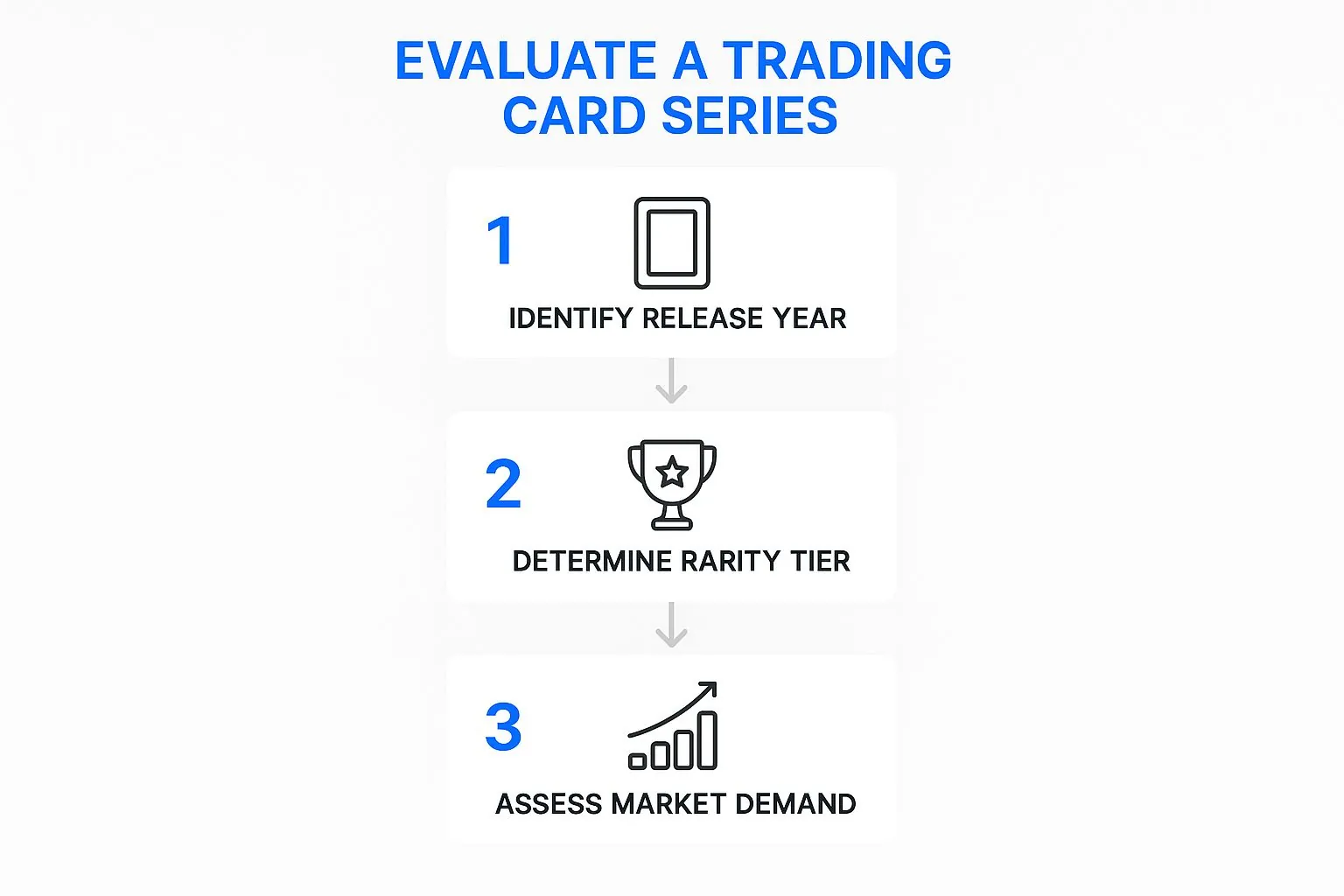
As you can see, a card’s origin story—when it was made and how many were printed—sets the stage for everything that follows.
The Critical Role of Condition
Condition is king. It’s the first thing anyone notices and the biggest single factor driving a card’s price tag. Professionals at grading companies like PSA, BGS, and CGC score a card’s physical state on a scale from 1 (Poor) to 10 (Gem Mint). The difference is staggering: a PSA 10 can command 10, 20, or even 100 times more than the exact same card graded just a point or two lower.
Even the tiniest flaws, often invisible to the naked eye, can knock a card’s grade down. We’re talking about microscopic surface scratches, printing that’s a millimeter off-center, or the slightest hint of white on a corner.
For a trading card collector, the difference between “near mint” and “gem mint” is more than a small detail—it represents the gap between a nice collectible and a top-tier investment asset.
Learning to spot these imperfections yourself, before you send a card off for grading, is a game-changing skill. It saves you a ton of money on grading fees for cards that have no shot at a high score and helps you find raw, ungraded gems when you’re buying.
To get started, it helps to know what graders are looking for. While professional grading is a nuanced process, you can learn to spot the major tells that separate the good from the great.
Quick Guide to Assessing Card Condition
| Grade Range | Common Name | Key Characteristics to Look For |
|---|---|---|
| 9-10 | Mint / Gem Mint | Virtually flawless. Sharp corners, clean edges, perfect centering, and a pristine surface. No visible imperfections. |
| 7-8 | Near Mint (NM) | Looks perfect at first glance. May have one minor flaw like a tiny bit of corner whitening or slightly off-center printing. |
| 5-6 | Excellent (EX) | More noticeable flaws. Corners might be slightly rounded, minor surface wear, or visible printing defects. Still looks good. |
| 1-4 | Good to Poor | Obvious signs of wear. Creases, heavy corner damage, major scratches, or discoloration. These are typically “binder copies.” |
This table is just a starting point, of course. But learning to think like a grader is the first step toward making smarter buys and maximizing the value of the cards you already own.
Decoding Rarity and Population
Next up are rarity and population—two concepts that are deeply connected. Rarity goes beyond how many cards were printed. It’s about how many are still around in top condition.
Here’s how they work together:
-
Inherent Rarity: This is baked in by the manufacturer. Think Common, Uncommon, Rare, or those chase cards labeled “Secret Rare.” Sometimes, a card is a “short print” (SP), meaning fewer copies were intentionally made compared to others in the set.
-
Population: This is the secret sauce. Grading companies publish population reports that tell you exactly how many copies of a specific card have earned each grade. A vintage card might have thousands of copies floating around, but the pop report could reveal that only 50 have ever scored a PSA 10. That’s what creates elite value.
This dynamic can lead to some surprising outcomes. A modern card with a low population of PSA 10s can sometimes be worth more than a famous vintage card that has a high population of graded copies.
Understanding Market Demand
The final pillar, demand, is the wild card. A card can be flawless, ultra-rare, and have a pop count of one, but if nobody wants it, it’s worthless. Demand is all about cultural relevance, nostalgia, and performance.
A star athlete having a monster season? Their rookie card prices will go through the roof. A new movie drops featuring a beloved Pokémon? The cards for that character will suddenly get hot. We saw this recently with the launch of Disney’s Lorcana, which pulled a whole new wave of fans into the hobby, creating a frenzy for cards with iconic characters.
This is where a collector needs to put on their market analyst hat. To really get a pulse on the market, checking a top collectible price guide is a must. Following auction results, keeping an eye on market trends, and joining community discussions will help you spot shifts in demand before they happen.
By looking at all four pillars together—Condition, Rarity, Population, and Demand—you get the full story. It’s this complete picture that lets you buy smart, sell with confidence, and build a collection that’s not only cool to look at but also a powerful financial asset.
Protecting Your Collection Like a Pro
Once you start viewing your cards as assets, the way you handle them changes completely. For any serious collector, proper protection is more than a good idea—it’s absolutely essential for preserving the value of your investment. Think of it like setting up different levels of security; not every card needs to be in Fort Knox, but your grails definitely do.
The mission is simple: shield your cards from their mortal enemies. We’re talking about dust, moisture, fingerprints, and the dreaded physical damage like bent corners or surface scuffs. Even the tiniest flaw can tank a card’s grade and chop its market value in half. Protecting them right from the start is the best insurance policy you can have.
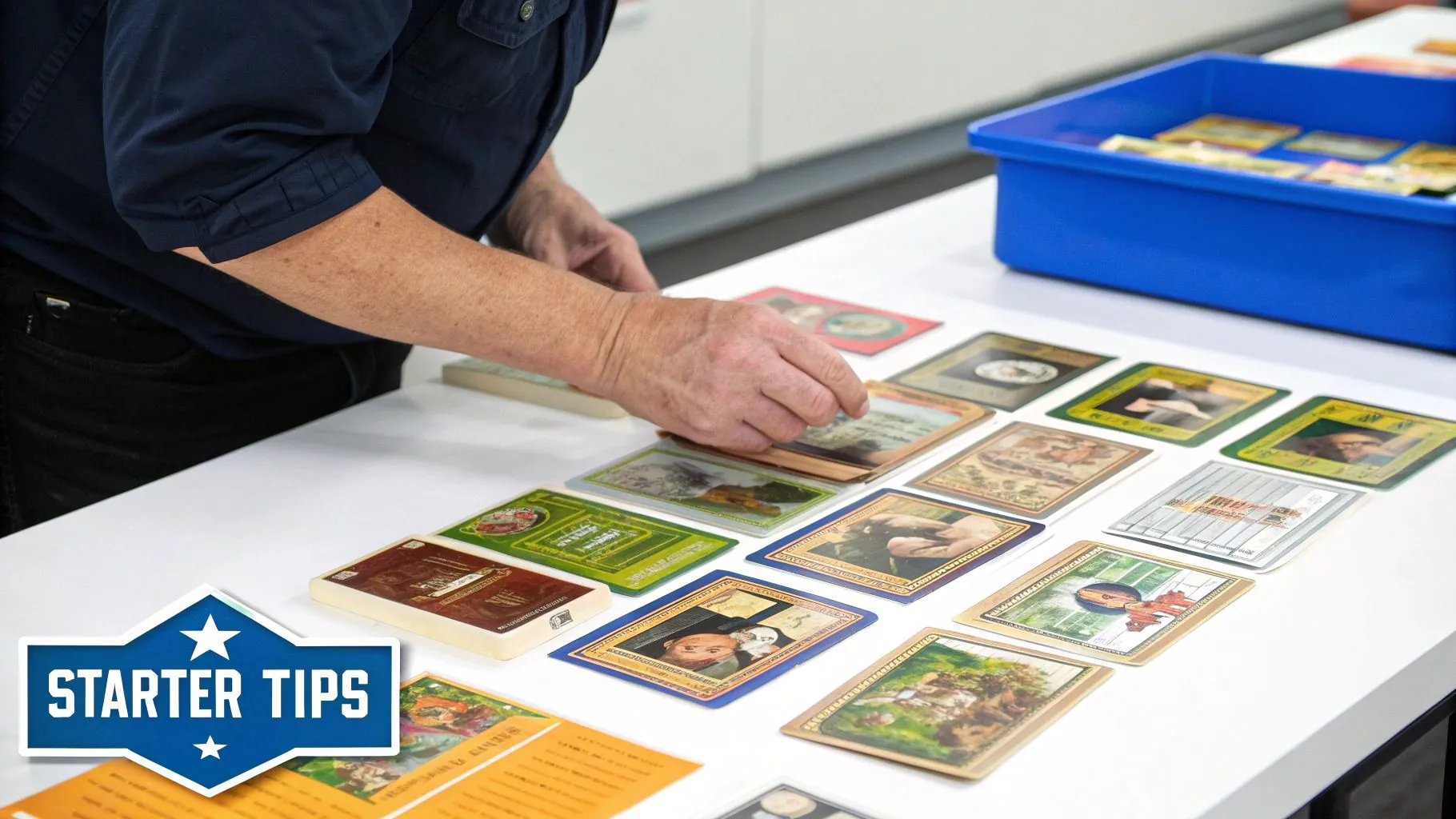
This all comes down to a clear hierarchy of supplies, where each piece of gear serves a specific role. Mastering this system ensures every card you own, from commons to masterpieces, gets the exact protection it deserves.
The Essential Layers of Card Protection
Just pulled a monster hit? The next few seconds are critical. Your first line of defense is always a soft plastic sleeve, better known as a penny sleeve. This thin, clear sheath is the non-negotiable first step for any card you want to keep pristine. It’s the only thing that should touch a raw card’s surface, protecting it from scratches and the oils on your fingers.
From there, you start adding layers of armor based on the card’s value and what you plan to do with it.
-
Toploaders: These are the workhorses of card protection. They’re semi-rigid plastic holders that provide fantastic structural support. A card in a penny sleeve fits snugly inside, preventing bends and dinged edges. This is the go-to standard for most cards in the $5 to $100 range.
-
Semi-Rigids: A bit more flexible than toploaders, these are what the pros use when submitting cards for grading. Big names like PSA actually prefer them because they make it easier to safely remove the card. If a card is destined for a slab, put it in a semi-rigid.
-
Magnetic Cases: Often called “one-touches,” these are the showroom floor for your best cards. These premium, two-piece hard cases snap shut with a magnet and often come with built-in UV protection. They offer a crystal-clear display and are perfect for high-value raw cards you want to show off.
A rookie mistake is sliding a raw card directly into a toploader or magnetic case. That’s a recipe for surface scratches. Always remember: the penny sleeve is the essential first barrier that makes every other protective measure safer and more effective.
Creating a Fortress for Your Collection
Once your individual cards are locked down, it’s time to think bigger: protecting the entire collection. This is all about controlling the environment where your cards live. The two biggest long-term threats are UV light and humidity.
Sunlight is a card’s worst nightmare. Give a card too much exposure to UV rays, and its vibrant colors will fade forever, absolutely wrecking its eye appeal and value. Always store your collection away from direct sunlight. If you display cards, make sure they’re in UV-protective cases and kept out of brightly lit rooms.
Humidity is a quieter, more insidious killer. Too much moisture in the air can cause cards to warp, stick together, or even grow mold. On the flip side, an environment that’s too dry can make old cardstock brittle. The sweet spot is a cool, dark, and dry place with stable temperature and humidity—a closet inside a climate-controlled home is great; a damp basement or a sweltering attic is a definite no-go.
For bigger or more valuable collections, investing in archival-quality storage boxes and a few desiccant packs (the little packets that absorb moisture) is a no-brainer. Beyond just sleeving and casing, it pays to learn the general best practices for safeguarding your entire library of cards. You can find more in-depth advice in these proven tips for storing collectibles. By thinking like a professional archivist, you’re making sure your investments are safe for decades to come.
Navigating the Collectible Investment Market
To really succeed in modern trading card collecting, you have to start thinking like an investor. The hobby has grown beyond childhood memories; it’s a full-blown alternative asset class. Market smarts and a bit of foresight are now just as important as your passion for the cards. It means looking past the individual pieces of cardboard to see the bigger economic picture shaping their value.
When you shift your mindset from pure collector to investor-collector, every decision changes. Buying a card is no longer just a simple purchase—it becomes a calculated acquisition. This is the strategic thinking that separates those who build a truly valuable portfolio from those who just end up with a big pile of cards.
Key Market Drivers and Inherent Risks
Several powerful currents move the trading card market, and understanding them helps you get ahead of trends instead of just chasing them. Nostalgia is a massive driver; adults with disposable income are hunting down the iconic cards from their youth, which creates steady demand for vintage sports and Pokémon cards. On top of that, the explosion of online communities has brought a global spotlight to the hobby like never before.
The numbers back this up. The global market for collectible trading cards is on track to hit around $1.75 billion in 2025. Market research shows a steady Compound Annual Growth Rate (CAGR) of about 3.79% through 2030. This growth really took off during the pandemic when everyone was looking for new hobbies at home. For a deeper dive, you can check out the full market research on collectible trading cards.
But where there’s opportunity, there’s always risk. It’s absolutely critical for any collector to keep these pitfalls in mind:
- Price Volatility: The market can swing wildly. A card’s value can get pumped up by influencer hype or short-term speculation, only to come crashing down just as fast.
- Market Hype: Be careful of the “fear of missing out” (FOMO). Chasing the hottest modern card without doing your homework is a great way to buy at the very top of a bubble.
- Counterfeits: As values go up, so does the quality of fakes. Learning to spot counterfeits and only buying from reputable sources is more than a good idea—it’s essential.
The Art of Portfolio Diversification
Just like a stock market investor wouldn’t dump all their cash into one company, a smart card collector shouldn’t put all their eggs in one basket. Diversification is a classic risk management strategy that works perfectly for collectibles. It’s all about building a balanced collection that can handle whatever the market throws at it.
Think of it like building a well-rounded sports team. You need a mix of reliable veterans and rookies with sky-high potential.
A diversified collection acts as a financial shock absorber. When one part of the market cools off, another might be heating up, which helps keep your portfolio’s total value stable and protects your investment.
Here’s a simple way to think about diversifying your collection:
- Blue-Chip Vintage: These are the certified legends—the Michael Jordan rookies, first-edition Charizards, and Mickey Mantle cards. They have a long history of appreciation, are always in demand, and are generally much less volatile.
- Modern Hits: This is where you find the high-rarity cards of today’s superstars or popular characters from the newest sets. They have huge growth potential but also come with a lot more risk and price swings.
- Sealed Wax: Keeping booster boxes and cases sealed is a popular long-term play. As the sealed supply dries up over the years, the value often climbs because of what could be inside.
By blending these categories, you build a portfolio that’s both stable and has serious room to grow. A great way to get a clear picture of this balance is to use an investment tracking spreadsheet to see how your assets are spread out. Having that clarity is key to making smart moves and turning your passion into a structured—and hopefully profitable—venture.
Using Modern Tools to Track Your Portfolio
Let’s be honest. For the modern collector, that old shoebox under the bed or a clunky spreadsheet just doesn’t cut it anymore. When your collection graduates from a simple hobby into a real asset portfolio, the tools you use need to graduate, too. It’s time to manage your cards with the same focus as a stock market investor, and thankfully, a new generation of portfolio trackers makes that possible.
These platforms do more than just list what you own. They transform your static, physical collection into a dynamic, living asset. You move beyond basic inventory and get access to real-time valuation, performance metrics, and a clear picture of how your cards fit into your overall net worth. This is the kind of professional oversight you need to make smart buying, selling, and grading decisions.
From Manual Spreadsheets to Automated Dashboards
Remember the old way? Hours of tedious, manual data entry. You’d have to hunt down recent sales on eBay, update prices one by one, and wrestle with complex formulas to figure out your gains and losses. It was a chore, it was full of errors, and it was always out of date the second you finished.
Today’s platforms automate that entire headache.
Just scan a graded card’s barcode or search a database, and you can add an asset to your portfolio in seconds. The software then does the heavy lifting, pulling in the latest market data from auction houses and marketplaces to give you a valuation that’s accurate up to the minute.
This is what a modern collection dashboard can look like—a clean, visual summary of your portfolio’s most important numbers.

The dashboard gives you an instant, high-level overview of your collection’s value, recent performance, and asset breakdown. It turns raw, messy data into clear, actionable intelligence.
Interpreting Your Collection Data
Once your collection is digitized, you unlock a treasure trove of data that helps you understand your portfolio’s health. Think of it as a financial check-up for your cards. These tools serve up the key performance indicators (KPIs) that every serious collector should be watching.
Here are the key metrics to keep an eye on:
- Total Portfolio Value: The live market value of your entire collection.
- Profit/Loss (P&L): Pinpoint which specific cards are your biggest winners and losers.
- Asset Allocation: See how your investment is spread across different categories (e.g., Pokémon vs. Sports, Vintage vs. Modern).
- Performance Over Time: Watch your portfolio’s growth with interactive charts, just like a stock index.
Tracking your collection with a dedicated tool goes beyond knowing what it’s worth today. It’s about understanding its performance history, identifying trends, and making strategic moves to optimize its future growth.
This analytical approach lets you spot opportunities you’d otherwise miss. For example, you might see your vintage basketball cards are consistently outperforming your modern football cards, which could prompt you to rebalance your holdings. Or maybe a specific card has spiked in value, signaling that now is the perfect time to sell. Using a specialized card collection app gives you the structure you need to manage these assets like a pro.
Integrating Cards into Your Total Net Worth
This is where it all comes together. Perhaps the most powerful feature of these modern tools is seeing your trading card portfolio in the context of your entire financial life. Platforms like PopaDex let you track your cards right alongside your stocks, real estate, savings accounts, and even crypto.
This holistic view is a total game-changer. It shows you exactly how your collectibles contribute to your total net worth and helps you make smarter, more balanced decisions about your overall asset allocation. For any collector who’s serious about the investment side of the hobby, this integrated approach is the final step—elevating a passionate pursuit into a professionally managed piece of your wealth-building strategy.
Spotting Opportunities in a Changing Market
Any collector who’s been around for a while knows the trading card market never sits still. To really succeed, you have to move past just buying and selling. It’s about developing a strategic eye for the constant shifts, where challenges and opportunities are really just two sides of the same coin.
One of the biggest hurdles today is market saturation. New sets come out with massive print runs, and the sheer volume of cards can make it tough to spot what has real long-term growth potential. This is where a sharp eye for scarcity becomes your best friend. Instead of chasing the same modern hits everyone else is, try looking for undervalued vintage cards with low graded populations or modern cards that are exceptionally difficult to grade as gem mint.
Reading the Market Sentiment
Understanding the psychology of the market is just as critical as knowing card values. The trading card world is a fascinating mix of two different crowds: passionate hobbyists and profit-focused investors. Their competing motivations create a dynamic tension that directly shapes prices.
- Hobbyist Influence: These collectors are driven by nostalgia and a genuine love for the characters or players. Their consistent demand creates a stable price floor for iconic, beloved cards.
- Investor Influence: This group is all about scarcity, grading, and potential returns. Their activity can trigger rapid price spikes and bring a lot more volatility into the market.
A savvy collector learns to read this sentiment. When speculative hype is running high, it might be the perfect time to sell into that strength. On the flip side, when the market cools and investors move on, the hobbyists are still there. This creates fantastic buying opportunities for those with a long-term vision.
The most successful collectors find their sweet spot at the intersection of passion and profit. They use hobbyist demand as a solid foundation and treat investor trends as signals, helping them make smart moves in bull and bear markets alike.
Long-Term Vision in a Volatile World
Market volatility is a given, but it doesn’t have to be a threat. Protecting your collection starts with how you source your cards. Always stick to buying from reputable dealers and use professional grading to authenticate your most valuable pickups. This is your number one defense against the ever-present risk of sophisticated fakes.
The industry’s future looks incredibly bright, though it’s not without its challenges. The trading card game market is projected to skyrocket from USD 7.43 billion in 2024 to USD 15.84 billion by 2034. But that growth is balanced by hurdles like price swings and counterfeiting. For many of us, it’s the emotional connection that keeps the market so vibrant, reminding us these are more than just commodities. You can find more details in this complete trading card game market research.
Ultimately, success boils down to maintaining a clear, long-term vision. Use market downturns to scoop up blue-chip assets at a discount and ride the uptrends to take profits on more speculative plays. This balanced approach takes discipline and a deep understanding of market mechanics, which is where modern tools become so valuable. For a closer look at how to maintain this strategic overview, check out these essential portfolio analysis tools that help collectors see the bigger picture.
Answering the Collector’s Big Three Questions
Whether you’ve just bought your first pack or you’ve been in the game for decades, the same fundamental questions pop up. Getting them right is the difference between a shoebox of cardboard and a strategic collection. Let’s tackle the three questions that every collector eventually asks.
To Grade or Not to Grade?
This is probably the most common fork in the road for collectors. Sending a card to be graded authenticates it and assigns a condition score. That little number on the plastic slab can multiply a card’s value, especially for high-demand, top-condition cards.
But it’s not a magic bullet. Grading costs money and takes time. For a common card or one with obvious dings and scratches, you might spend more on the grading fee than the card is actually worth.
My rule of thumb? Only grade cards that are in near-mint condition and have enough raw value to make the fee a smart investment. Always do a quick market check before you ship anything off.
How Do I Spot a Fake?
Nobody wants to get burned by a fake. Spotting them comes down to paying attention to the little things, because that’s where counterfeiters almost always mess up.
- Color Saturation: Look for colors that are washed out, way too dark, or have a weird, glossy sheen. Fakes rarely get the color profile just right.
- Text Clarity: Authentic cards have crisp, clean font. If you see any blurriness or funky spacing, it’s a huge red flag.
- Cardstock Feel: This one takes practice, but fakes often feel wrong. They might be too thin, flimsy, or even oddly smooth compared to a real card from the same set.
Your best defense is to have a confirmed real card on hand to compare it against. The difference is usually obvious when they’re side-by-side.
How Can I Start Investing on a Small Budget?
You don’t need a huge bankroll to get started. In fact, starting small is the smartest way to learn the ropes.
One great strategy is to target “ultra rare” cards from the latest popular sets right after they’re released, as prices can be more accessible. Another angle is to hunt for ungraded cards of iconic players or characters that look like they’re in great shape. You’re betting on your own eye for quality.
Finally, a classic move for new investors is buying sealed, modern booster boxes and just sitting on them for a few years. It’s a simple, set-it-and-forget-it approach.
Ready to manage your collection like a professional investor? PopaDex gives you the tools to track your cards, monitor their value in real-time, and see how they fit into your total net worth. Get started for free today.