
Product research and financial education from the PopaDex team.
Published · Updated
Best Wealth Management Apps for 2026: 5 Compared
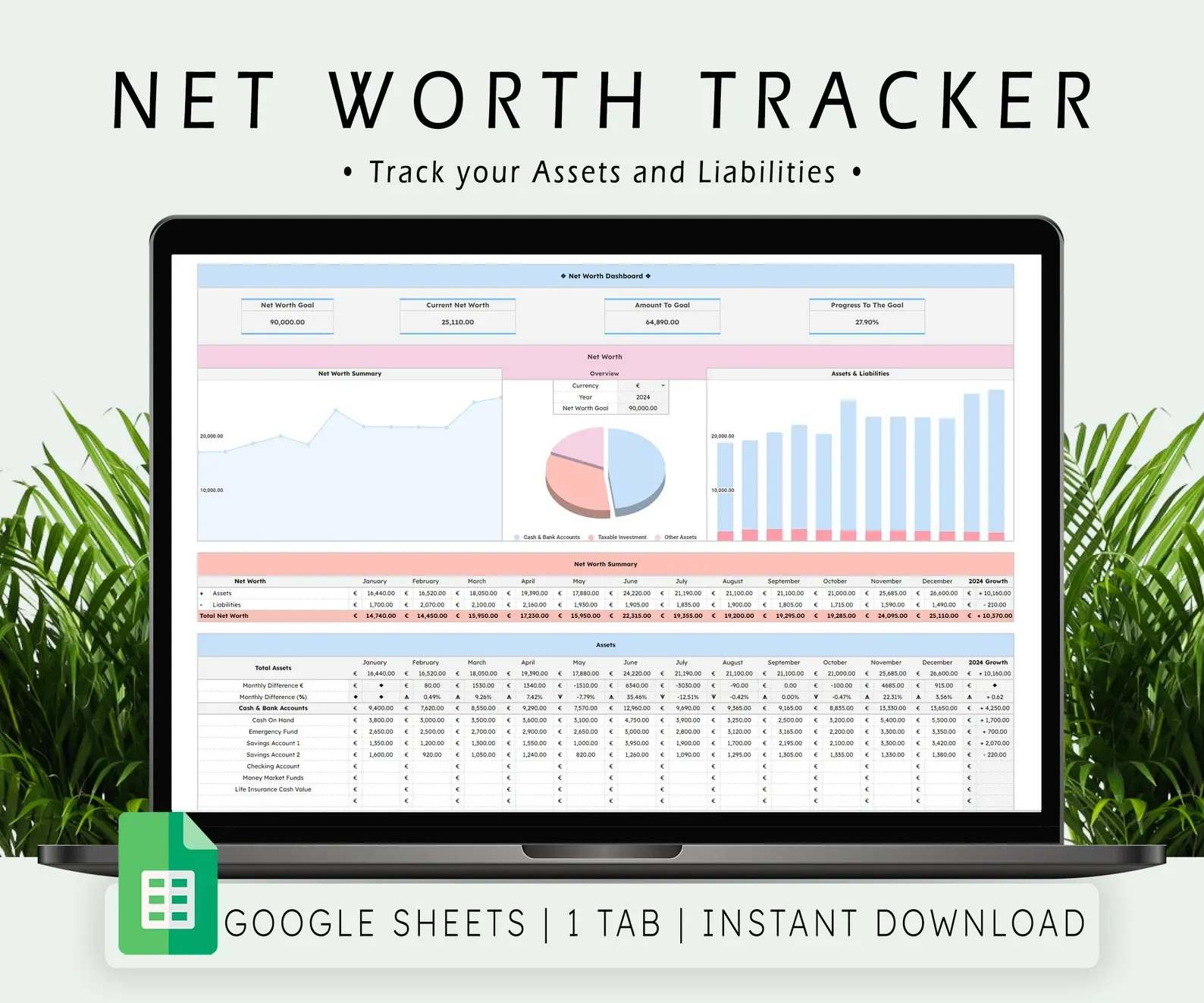
The best wealth management app depends on the job you need it to do. PopaDex is our pick for tracking a multi-currency net worth without handing over investment control. Empower Personal Dashboard is the strongest free US dashboard in this group. Kubera is built for complex assets. Wealthfront and Betterment are better choices when you want software to invest and rebalance money for you.
Those are different products, even though search results put them in the same category. A wealth tracker reports what you own and owe. A robo-advisor manages an investment account. A full wealth-management service adds human advice. Start with that distinction; otherwise, it is easy to compare prices for products that do unrelated work.
Best wealth management apps at a glance
| App | Product type | Best for | Entry cost checked 1 Sep 2026 | Main limitation |
|---|---|---|---|---|
| PopaDex | Wealth and net-worth tracker | Multi-currency households and expats | Free manual plan; Premium from EUR 5/month | Does not manage investments or provide financial advice |
| Empower Personal Dashboard | Financial dashboard with optional advisory service | Free US account, investment and retirement overview | Dashboard free; managed services start at $100,000 | US-focused; advisory service has a high minimum |
| Kubera | Wealth tracker | Complex assets, entities and alternative investments | 14-day trial; Essentials $250/year | Expensive for a simple balance sheet; not a budgeting app |
| Wealthfront | Robo-advisor and financial dashboard | Automated ETF investing and tax features | 0.25% annual advisory fee; $500 minimum | Manages eligible investment accounts rather than every part of a financial plan |
| Betterment | Robo-advisor with optional human advice | Automated investing with a low initial balance | $5/month or 0.25% annually; conditions apply | Premium advice costs 0.65% and requires $100,000 |
Pricing, eligibility and features change. We checked the official pages linked below on 1 September 2026. Confirm your country, required accounts and current terms before opening or funding an account.
The short answer
- Choose PopaDex if you want one net-worth view across currencies and prefer to keep control of investment decisions.
- Choose Empower Personal Dashboard if you are in the US and want a free connected dashboard with retirement tools.
- Choose Kubera if ordinary budgeting apps cannot represent your property, private investments, crypto, entities or other non-standard assets.
- Choose Wealthfront if you want a robo-advisor to build and maintain an ETF portfolio.
- Choose Betterment if you want automated investing now and may want access to human advisers later.
No app in this comparison is best for every reader. If your only goal is to monitor net worth, paying an assets-under-management fee for automated investing solves the wrong problem. If you want trades, rebalancing or regulated personal advice, a tracker alone is not enough.
Multi-currency wealth tracking
Use PopaDex when you want the full balance sheet, not an investment manager
Track accounts, investments, property, pensions and debts in one base currency. Start with manual tracking for free, then add supported account connections on Premium.
How we compared the apps
We evaluated each product against the same questions:
- Is it a tracker, a robo-advisor or a human advisory service?
- What does the entry plan cost, and is there an account minimum?
- Does the product only report investments, or can it represent the rest of a household balance sheet?
- Who makes investment decisions: the user, software or a human adviser?
- Can it handle unusual assets, liabilities and multiple currencies?
- What important job does it not do?
This is desk research based on official pricing, product and support pages. We did not fund accounts with every provider or test every bank connection. Connection coverage and refresh reliability can differ by institution. PopaDex publishes this comparison and is included in it; that conflict is explicit, and we recommend other products when they are a better fit.
Download the comparison evidence
The wealth-management app source ledger (CSV) records the product type, selection criteria, current public price, important minimums, limitations, official source URLs and verification date for all five products.
The ledger is a dated source map, not a live price feed or a claim of funded-account testing. Use the official links in it to recheck any product you shortlist.
1. PopaDex: best for multi-currency wealth tracking
PopaDex is a net-worth tracker, not an investment manager. It records bank accounts, investments, property, pensions and liabilities, keeps each account in its original currency, and reports a total in one base currency. Manual tracking is free. Premium adds compatible account connections.
That makes PopaDex a good fit for expats and households whose finances cross borders. A manual account also covers an asset that cannot be connected, which is useful for property, pensions and smaller international institutions.
The limitation matters: PopaDex does not trade, rebalance or choose investments for you. It is also not a substitute for a financial adviser. If you want discretionary portfolio management, Wealthfront or Betterment is closer to the job. If you want advice about tax, estate planning or a concentrated stock position, look for a qualified professional in your jurisdiction.
Cost: Free manual plan; Premium starts at EUR 5 per month.
Choose it when seeing household net worth across currencies is the main job.
Skip it when you want an app to manage investments or provide personal recommendations.
See the PopaDex net-worth workflow or try the demo.
2. Empower Personal Dashboard: best free US dashboard
Empower Personal Dashboard is free and combines linked accounts, net worth, cash flow, investments and retirement planning. Empower also sells managed investment and wealth-management services, but the dashboard does not require an advisory relationship.
The free dashboard is the reason Empower belongs in this comparison. It gives a US household a broad financial overview without a subscription. People who later want professional management can apply for Empower’s paid services. The official wealth-management page lists Investment Services from a $100,000 minimum and Wealth Management from $250,000.
The trade-off is geographic and commercial fit. Empower is designed around US accounts and retirement planning. Dashboard users may be offered advisory services. It is less suitable for a household that needs native multi-currency reporting or broad international institution coverage.
Cost: Personal Dashboard is free. Paid managed services have asset minimums and separate fees.
Choose it when you want a free US investment, retirement and net-worth dashboard.
Skip it when your accounts span several countries or you do not want an account-aggregation product tied to an advisory business.
Check Empower’s current wealth-management tiers before considering its paid service.
3. Kubera: best for complex and unusual assets
Kubera is a wealth tracker for people whose balance sheet extends beyond ordinary bank and brokerage accounts. Its public product materials cover real estate, crypto, private investments, vehicles, documents, multiple currencies and beneficiary workflows. Kubera Black adds ownership tags, nested portfolios and support for more complex people, trusts and entities.
Kubera is the strongest tracker here for a genuinely complicated balance sheet. It is also much more expensive than a basic finance app. Essentials is listed at $250 per year and Black at $2,500 per year after a 14-day trial.
The product monitors wealth; it does not become your investment adviser because the dashboard is detailed. Kubera is also not built around daily budgeting. A household with a few accounts may pay for complexity it does not need.
Cost: Essentials $250 per year; Black $2,500 per year; 14-day trial.
Choose it when trusts, entities, private assets or unusual holdings make a standard dashboard incomplete.
Skip it when you need budgeting, investment management or a low-cost net-worth view.
For a narrower tracking comparison, read PopaDex vs Kubera.
4. Wealthfront: best for automated investing
Wealthfront is a robo-advisor. Its Automated Investing Account builds and maintains a portfolio based on the user’s risk profile. The service includes automatic rebalancing and tax-loss harvesting for eligible taxable accounts. The official price is a 0.25% annual advisory fee, and Wealthfront lists a $500 minimum for an Automated Investing Account.
Choose Wealthfront because you want the investment account managed. Do not choose it merely to see a consolidated net-worth number. Its dashboard can link accounts and show progress, but the paid service is priced for portfolio management.
Tax-loss harvesting may be useful, but the value depends on the account, tax situation and future gains. Treat marketing estimates as scenarios, not guaranteed savings. Fund expenses and other product-specific costs can apply in addition to the advisory fee.
Cost: 0.25% annual advisory fee for Automated Investing; $500 account minimum.
Choose it when you want software to invest and rebalance an eligible portfolio.
Skip it when you want human financial planning or only need a wealth dashboard.
5. Betterment: best for automated investing with an advice path
Betterment also manages investment portfolios. Its pricing page lists $5 per month for investing accounts below $24,000, with a switch to a 0.25% annual fee when the user has at least $24,000 or sets up recurring deposits or transfers of $200 or more per month. There is no minimum balance for the entry investing service.
Betterment Premium adds access to financial professionals. It charges 0.65% annually on the first $1 million and requires a $100,000 eligible investment balance. That creates a clear upgrade path for someone who wants automation first and advisers later.
The pricing needs a calculator, not a slogan. At a small balance, $5 per month can be a high percentage of the money invested. At larger balances, percentage fees compound into meaningful annual costs. Compare the annual dollar fee with the planning and tax features you will actually use.
Cost: $5 per month or 0.25% annually for the entry investing service, depending on balance and recurring deposits; Premium is 0.65% with a $100,000 minimum.
Choose it when you want a robo-advisor with an optional human-advice tier.
Skip it when you prefer to choose and rebalance your own portfolio or only need tracking.
Tracker, robo-advisor or human wealth manager?
The label “wealth management app” is broad enough to hide the most important decision.
| Your actual need | Product type to compare | What it should do | Examples from this page |
|---|---|---|---|
| See everything you own and owe | Wealth tracker | Aggregate or manually record assets and liabilities; report net worth | PopaDex, Kubera, Empower Dashboard |
| Put an investment portfolio on autopilot | Robo-advisor | Select, trade and rebalance investments within an eligible account | Wealthfront, Betterment |
| Get personal recommendations | Advisory service | Provide advice through appropriately qualified professionals | Empower paid services, Betterment Premium |
A tracker can improve visibility without changing who controls the money. A robo-advisor has authority over an enrolled investment account. An advisory service adds human recommendations, but the scope varies. Read the agreement before assuming that tax filing, estate documents, insurance advice or every account in your household is included.
What to verify before signing up
Your country and institutions
An app can be excellent and still fail with the bank, pension or brokerage you use. Search the provider’s current institution list and test critical connections during a trial. Keep a manual fallback for accounts that cannot connect reliably.
The annual fee in dollars
Convert a percentage fee into money. A 0.25% annual fee is $250 on $100,000 and $2,500 on $1 million, before underlying fund expenses or other charges. A flat subscription may be cheaper for a large balance, but it may not include any investment management.
Who can move or trade money
Read-only aggregation, investment discretion and human advice are different permissions. Confirm whether the provider can only view account data, can trade inside an enrolled account, or can move cash.
Export and cancellation
Check whether you can export balances, holdings and history. For a managed account, also review transfer-out rules, closing fees, tax consequences and what happens to proprietary or fractional holdings.
Advice scope
Access to a professional does not mean every question is covered. Ask whether the service includes retirement planning, equity compensation, tax projections, estate coordination or only portfolio guidance.
Our verdict
Most people searching for a wealth management app need to make one choice first: visibility or delegation.
Use PopaDex, Empower Personal Dashboard or Kubera when the immediate problem is seeing the full balance sheet. Pick between them based on geography, asset complexity, price and whether multi-currency reporting matters. Use Wealthfront or Betterment when you want to delegate investment management and accept an assets-based fee.
If a major tax, estate, business-sale or concentrated-stock decision is driving the search, app features are secondary. Compare qualified advisers and the written scope of service, not just dashboards.
Wealth management app questions
Do I need a wealth management app?
You may benefit from one if accounts, assets or liabilities are scattered and you cannot answer basic questions about net worth, allocation or fees. You do not need automated investment management simply because your net worth crosses an arbitrary threshold. Buy the service that solves the current problem.
What is the difference between a wealth tracker and a wealth management app?
A wealth tracker records and reports financial information. Some products called wealth management apps also open and manage investment accounts or provide human advice. Check who controls investment decisions and what the fee pays for.
Can a wealth management app replace a financial adviser?
A tracker cannot. A robo-advisor can automate an eligible portfolio but does not necessarily cover taxes, estate planning, insurance, business interests or cross-border questions. A hybrid service may include advisers, but its scope and professional obligations depend on the provider and jurisdiction.
Which app is best for international or multi-currency wealth?
PopaDex and Kubera are the most relevant options in this comparison. PopaDex is the lower-cost choice for a household net-worth view; Kubera is stronger for complex assets and entities. Verify required institutions, currencies and residency eligibility before paying.
Last checked: 1 September 2026. This page is educational and does not provide investment, tax or legal advice.